The Hidden Trap of Self-Criticism: A Guide to Authentic Self-Awareness
A
ABY Team
ABY Team
Mindful Read
💌
Stay in the know
Receive thoughtful insights on mindful living, delivered with intention.
Receive thoughtful insights on mindful living, delivered with intention.
Receive thoughtful insights on mindful living, delivered with intention.
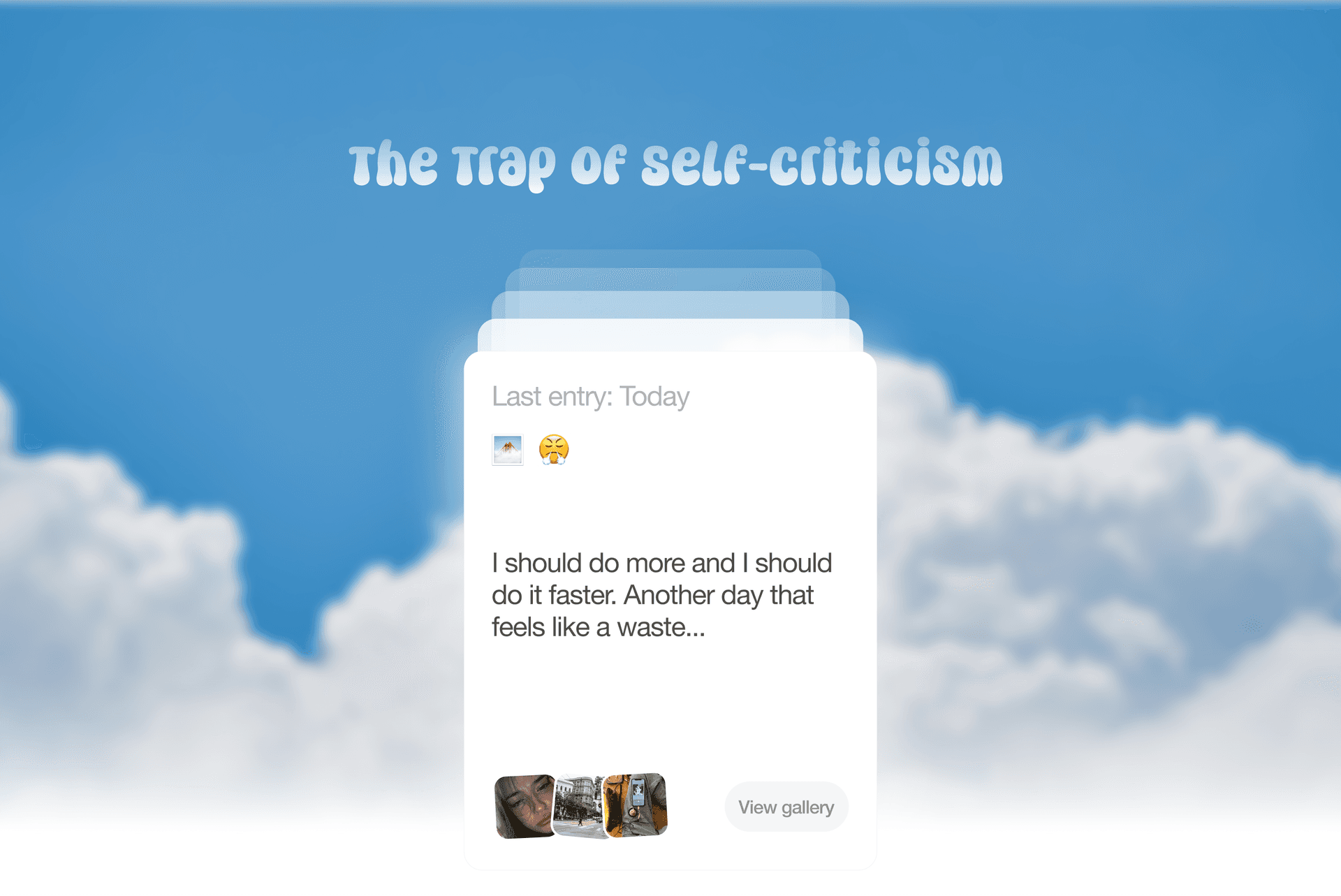
How could I be so foolish? I should have anticipated this.
Sound familiar? That internal voice—the one that's quick to highlight every error and defect—often disguises itself as a tough-but-fair coach pushing you toward improvement. Many high-achievers confuse this internal monologue with honesty, believing that self-imposed harshness is the key to growth.
But what if that voice isn't your coach? What if it's merely a critic?
Understanding the difference between self-criticism and self-awareness is crucial for developing emotional intelligence and achieving sustainable personal growth. This distinction involves recognizing that one is rooted in shame while the other is based on curiosity. One keeps you entrapped, and the other sets you free.
First, let's clarify something: recognizing your weaknesses isn't the same as punishing yourself for them. True self-awareness involves seeing the entire picture—your achievements, your errors, your strengths, and your growth areas—with clarity and empathy.
The Illusion of Self-Criticism as Truth in High-Achievers
Many can swiftly list areas needing improvement, yet struggle to name five strengths. We evolved to believe that self-awareness equates to knowing our shortcomings.
This is the playground of the inner critic. It disguises self-judgment as a supposed roadmap to progress. But when you focus solely on faults, you aren't being candid; you're being unnecessarily harsh, viewing yourself through a skewed lens that enlarges every flaw while ignoring every triumph.
Distinguishing Self-Judgment from Emotional Intelligence
The true catalyst of growth is emotional intelligence, beginning with self-awareness. Former NFL linebacker and leadership coach Rennie Curran emphasizes their divergent effects despite surface resemblances.
Self-awareness isn't about tallying failures. It's a tool to comprehend circumstances and choose the best path forward. It emphasizes observation over condemnation.
When self-criticism becomes your default, you risk a damaging and unproductive loop. This isn't merely a fleeting moment of feeling bad; it lays down entrenched shame cycles that can adversely affect your mental health and personal development.
How Self-Criticism Fosters Cycles of Negative Thoughts
The cycle begins with a mistake. The inner critic swiftly attacks: "You're a failure." This kicks off a wave of shame—the sinking feeling that you are inherently flawed. This state can be immobilizing, potentially leading to anxiety and depression and a fear of future attempts. It results in evading challenges to avoid feelings of failure, nourishing the belief that inadequacy is innate, creating a vicious cycle that confines you.
Breaking the Loop: Establishing a Healthy Inner Dialogue
The remedy to this toxic cycle involves nurturing a healthier internal dialogue. It starts by recognizing that your thoughts aren't facts. The self-judgment voice often echoes past experiences or societal dictates, not unassailable truths. Breaking the loop involves slowing down, recognizing the critical voice without subscribing to its narrative, and gently redirecting toward curiosity.
One of the most effective tools for nurturing this new habit is journaling for self-awareness. However, the intent is paramount. Your journal should serve as a mirror reflecting your reality, not a gavel judging perceived inadequacies.
Harnessing Journaling for Self-Awareness and Growth
Using your journal as a mirror creates a secure space to process the day's events and see the entire spectrum. It permits you to note thoughts and feelings without the compulsion to immediately rectify them. The act of writing offers a healthy distance, allowing a more objective and compassionate observation of your internal world.
Techniques for Reflection without Harshness and Judgment
Transitioning from criticism to awareness takes practice. It requires frameworks and strategies to train your mind to seek positives as much as negatives.
The ABY Framework for Gentle Self-Reflection
Consider the ABY framework—"A Better You"—a simple, real-time tool for gentle self-reflection. It helps catch yourself before spiraling.
Strategies for Cultivating Emotional Intelligence
Reflective practices are foundational to emotional intelligence. It involves learning to identify, comprehend, and regulate your emotions. Begin by naming your feelings more precisely (is it annoyance or disappointment?), noticing where they manifest in your body, and calmly questioning their messages.
A fundamental shift lies in the questions we ask ourselves. It's time to retire the recurring criticisms and adopt an attitude of curiosity.
Turning "What's Wrong with Me?" into "What's Happening in Me?"
This linguistic transformation can revolutionize your inner dialogue. "What's wrong with me?" implies you're broken. "What's happening in me?" recognizes you're a complex human experiencing something worthy of understanding.
Journaling Exercises to Cultivate a Compassionate Inner Voice
Employ these prompts in your journal to transition from self-judgment to self-exploration.
Balancing honesty and kindness isn't contradictory; it's the gateway to unlocking your authenticity.
While you may not be where you wish, in choosing awareness over criticism, you steer your journey with informed decision-making instead of harsh assessments, setting the stage for genuine, enduring growth.
More reflections to inspire your path